so, as someone that thinks Unity is an amazing engine, and also now can code bec. visual scripting has been added, made a simple Tomb Raider - controller, and is going to add a raycast // no-clipping camera, it’s now at the issue, or topic of level - design, or what’s a good approach to level - design . . .
there are several #problems, namely that the story doesn’t necessitate levels, a simple example, there’s some trouble, hero then shows up, beats the criminals, faces a boss, and ’ game over ', in theory to tell that story one just needs a few screens, 5 - 10 gang - bangers, and a boss, then it’s done, or roll also credits, the problem is that it’d take a few minutes to complete an entire game, and it’s be almost a waste of effort to make the stuff in a video - game engine, learning to code, art, overall script, other stuff . . .
that’s where perhaps level - design is an important point, and one of the goals of making a video - game is to effectively, fast, and also reliably make good levels, areas, or event - zones, where stuff happens, or the story, or message of the title takes place, and perhaps this is the point . . .
to make a book, one writes 500 - 600 pages of text, where most of it is filler, descriptive, various dialogue, or description of the setting, or events – in a video - game one makes levels that work as filler, points-of-interest, or narrative // event - places, and that is what makes books, also video - games good
as an example, right now trying to make a Tomb Raider - clone, and esp. for the earlier titles the levels were almost content, or game-play-elements themselves, ie. figuring how to get across levels, mazes, various puzzles, or where-is-door stuff was sort - of the ’ game - play ', or at least part of the challenges, and that’s what made me think bit over what good level - design, obstacle-course-elements, where-is-door, and perhaps the rare avoid-some-boss places is, or how one makes a good level, or if there are at least a few good places to learn from // study the more classic, or titles known for better level - design . . .
so, the questions are . . . .
- why is level - design important, should it be taken seriously
- what are the best places to learn level - design
- does it make sense to study particular titles, or classic series
- is there a ’ logical ', or reliable way of making good level - design
- does it make sense to call level - design an important artistic // creative discipline
not sure there’s a simple answer, or any way to actually learn this stuff, also have never made a single level before, right now am trying to make my first level over a Tomb Raider - clone, have gotten this far, and was wondering if there was a way to learn this, or understand level - design bit better before trying to make some wild, or near - AAA titles ( don’t laugh, scope-limit-is-real ) . . . .
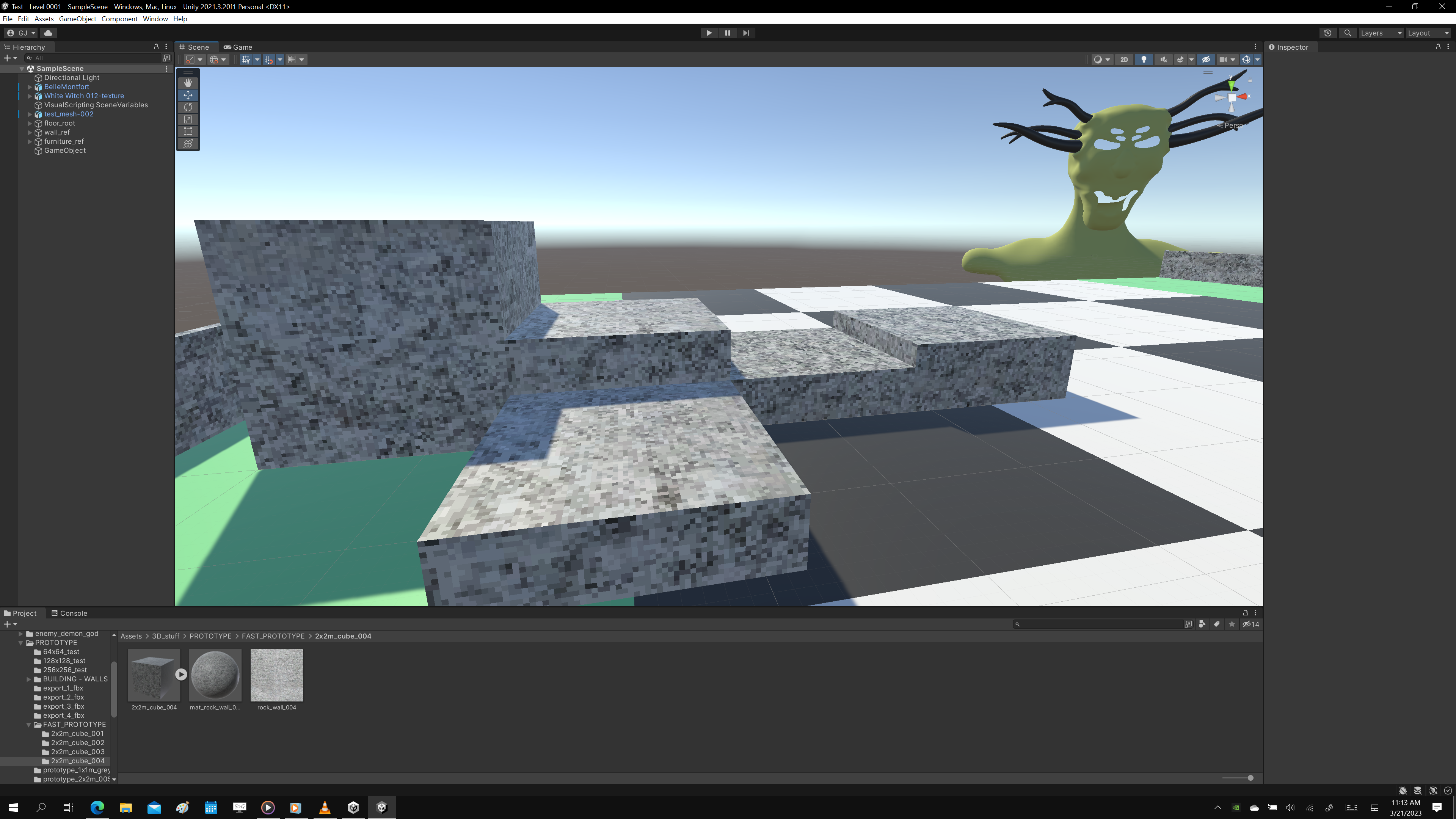
have made simple blocks, added bit collision, and idea is to copy - paste simple shapes // retro - style content into a level, and figure simple jump - mechanics based on the environment, ie. character can reach this particular height, jump goes over 4 m distance, so it’s all sort - of ’ math ', or half - geometry based mechanics, where the level - design also ’ plays ’ on those systems, or there’s a perhaps ’ symphony ’ of elements, level - details, and various features . . . .

anyway, the goal is to make a bit tribute over the first Tomb Raider - titles, and there were a ton of traversal - puzzles, or jump - mechanics, and overall just wondering what good level - design is, if there are rules of the ’ trade ', or design, or if one wants to learn more then where to start // find better examples . . . . 


