Caveat: numbers are for Steam only! I know it’s 6 months old but haven’t seen it and didn’t come up in search here…
There are graphs that I haven’t seen much. This one for instance, seemingly unexpected marketshares:

That’s “number of units sold” per engine. Clearly AAA titles made with Unreal or custom engines (id Tech, Frostbite, ..) are the million-sellers, they got the big brands and marketing bucks.
This dwarves all the metrics for the ‘non-other’ engines (except Unreal), hence why Godot merely scores an honorable 1% together with GameMaker.
Broken down by number of sales (Caution: “size” does not refer to game size or development time but number of units sold):
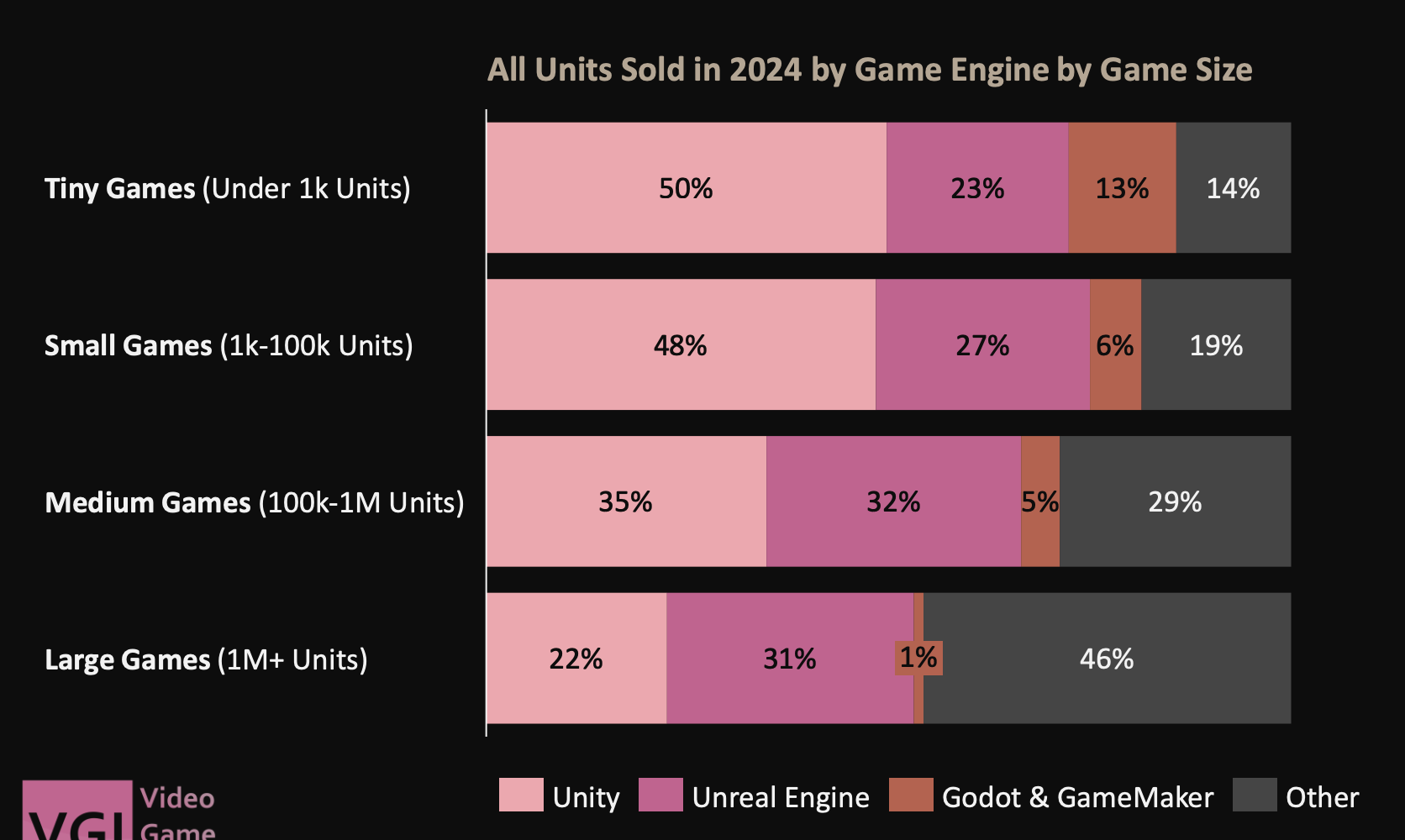
The 1% for Godot under large is - I’m guessing - almost certainly comprised of just Brotato, Buckshot Roulette and Dome Keeper. Unity is pretty healthy in the Indie segment below 1M units sold.
The trend of “Unity dying” is pretty obvious:
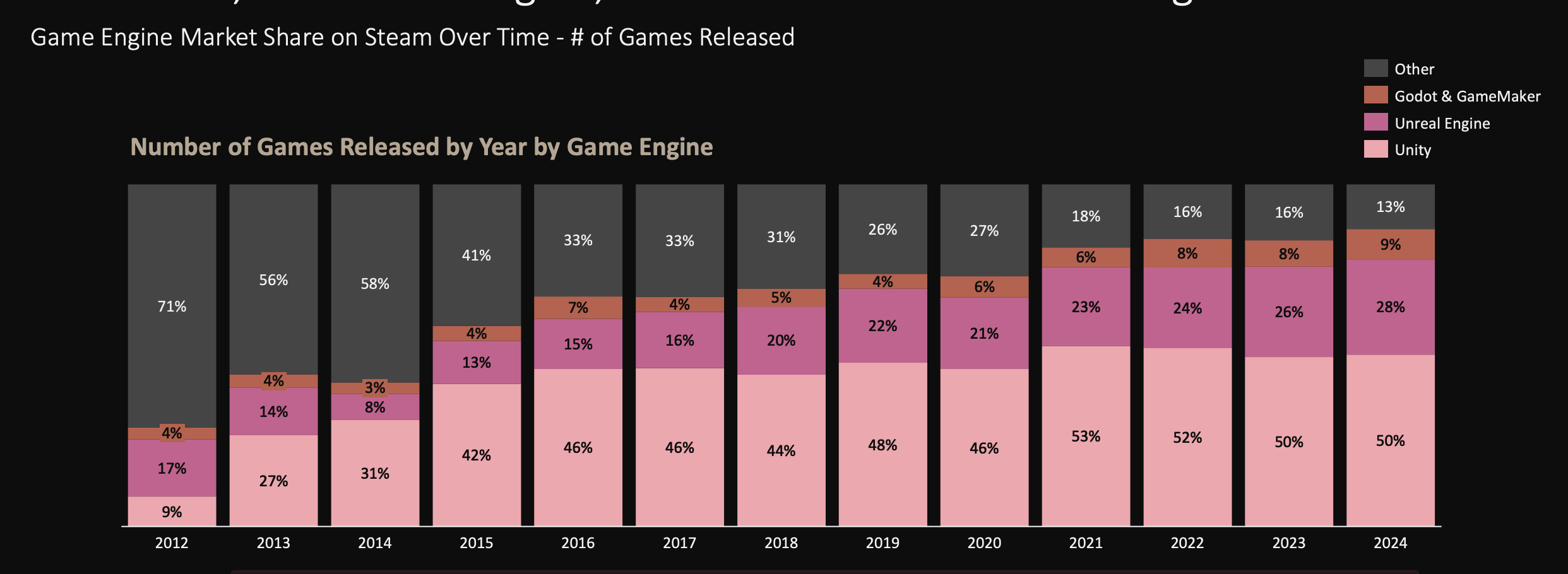
Until you consider that the 3% loss in “marketshare” (‘games released’ is not market share) since 2021 almost entirely surfaces in the “tiny” games section of other engines.
Just to put this in perspective. But certainly Godot is coming along nicely. Google web search trends show it nicely how the runtime fee disaster elevated Godot like a stairstep. I also expect Unreal to see a considerable amount of new users in the coming years due to Unreal Editor for Fortnite.

So there’s pressure on Unity from both sides. Though there’s no fourth contender anywhere to be seen. GameMaker is for reference, at least it doesn’t completely flatline in this graph like all the other (many) possible contenders I tried.
Another interesting graph where we see a whopping 12% increase of Unreal games released last year:

Most likely more and more AAA studios are giving up on maintaining their in-house engines, switching to Unreal instead. The pool of Unreal talent is quite attractive over training engineers to learn and use the proprietary tools that you’re also spending lots of money on just to keep it up to date. But why is that jump so significant? Maybe UE5?
VGI providing their outlook into 2030:

And I tend to agree, specifically with Godot “only 5%”. That’s still a 2-3 fold increase from today!
Of all the lawnmower engines it’s clearly the only one running on high octane:

Not sure if they haven’t tracked Godot before 2020 or whether it was entirely insignificant until then.