I have been working on my Enemy movement script. I have watched a couple of Youtube videos studying various different methods of Enemy movement.
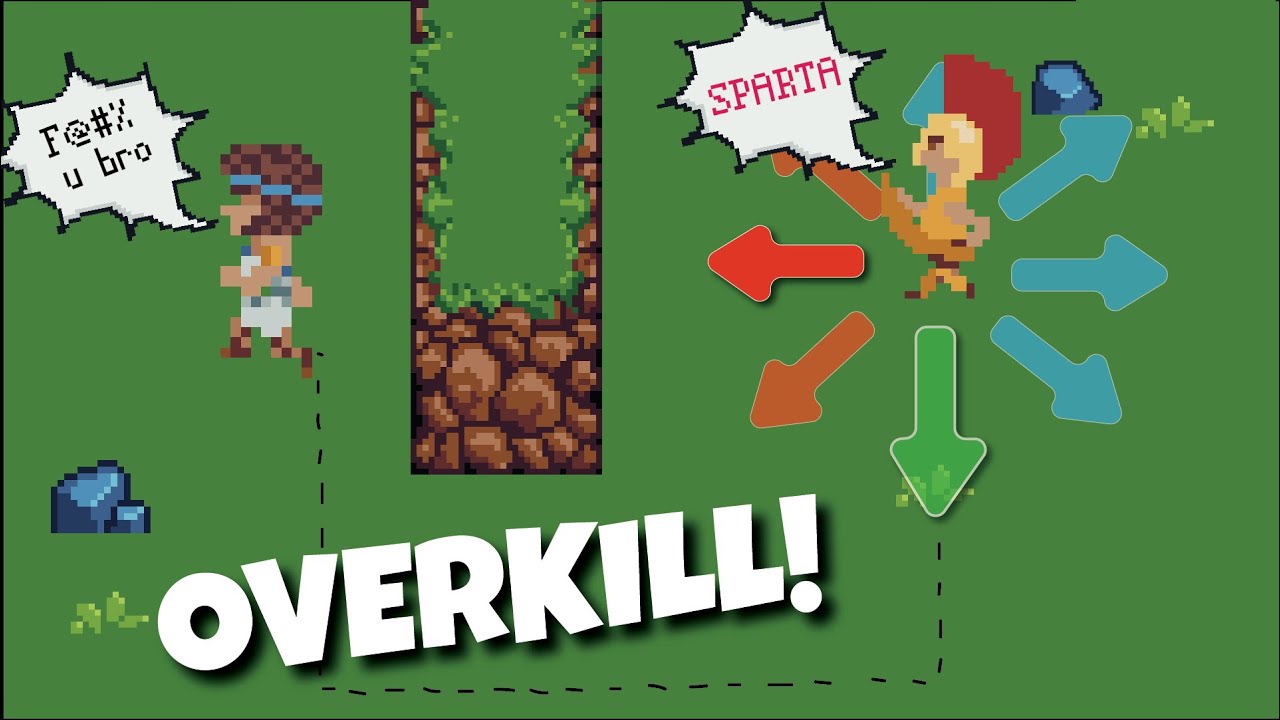
I have found this video very helpful that explains how to make enemy move while avoiding obstacles using 8 directions vector:
My enemy setup:
For my Enemy I use a simple sprite with Rigidbody 2D(Dynamic) and Collider attached
My complete code:
using System.Collections;
using System.Collections.Generic;
using JetBrains.Annotations;
using Unity.VisualScripting;
using UnityEditor.Callbacks;
using UnityEngine;


//Very simple to PlayerFollower_simple script but with lerp smoothing enabled.
public class PlayerFollower_simple_smooth : MonoBehaviour
{

    public Transform target; //drag and stop player object in the inspector
    private Rigidbody2D rb;
    public float stoppingDistance = 0.1f;
    public float speed = 2.0f;
    public float player_detectionDistance = 5.0f; // for player detection
    public float obstacle_detectionDistance = 1.0f; // for obstacle detection

    //if smoothing is enabled, allow the smoothness factor to be set in the inspector
    [Range(0.0f, 1.0f)]
    public float smoothness = 0.0f;  // Add this variable to control the smoothness of steering


    private Vector2 currentVelocity = Vector2.zero;  // Keep track of current velocity

    [SerializeField]
    private bool showGizmos = true;

    public float[] interest = new float[8];
    public float[] danger = new float[8];
    public float[] result = new float[8];


    public List<Vector2> eightDirections = new List<Vector2>
    {
        new Vector2(0,1).normalized,    // top
        new Vector2(1,1).normalized,    // top-right
        new Vector2(1,0).normalized,    // right
        new Vector2(1,-1).normalized,   // bottom-right
        new Vector2(0,-1).normalized,   // down
        new Vector2(-1,-1).normalized,  // bottom-left
        new Vector2(-1,0).normalized,   // left
        new Vector2(-1,1).normalized    // top-left
    };


    void Start()
    {
        rb = GetComponent<Rigidbody2D>();

    }


    void FixedUpdate()
    {
        Vector2 current_position = transform.position;
        Vector2 target_position = target.position;
        Vector2 direction = (target_position - current_position).normalized;
        Debug.Log("Direction: " + direction);


        // Set the layer mask to ignore the enemy layer
        LayerMask obstacleLayerMask = LayerMask.GetMask("Obstacle");
        // Initialize danger values to zero at the beginning of each frame. This ensure we can calculate sum of danger values for each direction
        for (int i = 0; i < danger.Length; i++)
        {
            danger[i] = 0;
        }

        for (int i = 0; i < eightDirections.Count; i++)
        {
            // Calculate the interest based on the dot product
            interest[i] = Vector2.Dot(direction, eightDirections[i]);

            RaycastHit2D hit = Physics2D.Raycast(transform.position, eightDirections[i], obstacle_detectionDistance, obstacleLayerMask);

            if (hit.collider != null && hit.collider.CompareTag("Obstacle"))
            {
                Debug.DrawRay(transform.position, eightDirections[i] * obstacle_detectionDistance, Color.yellow);

                // Accumulate the danger values in the danger array
                if (i == 0)
                {
                    danger[i] += 2;
                    danger[i + 1] += 1;
                    danger[7] += 1;
                }
                else if (i == 7)
                {
                    danger[i] += 2;
                    danger[0] += 1;
                    danger[i - 1] += 1;
                }
                else
                {
                    danger[i] += 2;
                    danger[i - 1] += 1;
                    danger[i + 1] += 1;
                }
            }
        }

        // Calculate the result vector
        for (int i = 0; i < result.Length; i++)
        {
            result[i] = interest[i] - danger[i];
        }

        // Calculate the resulting direction by summing up the result vectors
        Vector2 resultingDirection = Vector2.zero;
        for (int i = 0; i < result.Length; i++)
        {
            resultingDirection += eightDirections[i] * result[i];
        }
        resultingDirection.Normalize();
        // Calculate the desired velocity based on the resulting direction
        Vector2 desiredVelocity = resultingDirection * speed;

        // Smooth the velocity based on the smoothness factor
        currentVelocity = Vector2.Lerp(currentVelocity, desiredVelocity, smoothness);
        rb.MovePosition(current_position + currentVelocity * Time.fixedDeltaTime);


        for (int i = 0; i < interest.Length; i++)
        {
            Debug.DrawLine(transform.position, (Vector2)transform.position + eightDirections[i] * interest[i], Color.green);
            Debug.DrawLine(transform.position, (Vector2)transform.position + eightDirections[i] * danger[i], Color.red);
            Debug.DrawLine(transform.position, (Vector2)transform.position + eightDirections[i] * result[i], Color.yellow);
        }

    }

    //Draw the gizmo in the scene view
    void OnDrawGizmos()
    {
        if (showGizmos == false)
        {
            return;
        }
        else
        {
            if (target == null)
            {
                return;
            }
            Gizmos.color = Color.red;
            Gizmos.DrawWireSphere(transform.position, player_detectionDistance);
            Gizmos.color = Color.blue;
            Gizmos.DrawWireSphere(transform.position, obstacle_detectionDistance);
        }
    }

}
As you can see from the code above, I am assigning interest and danger values and then calculating the result. The enemy is following player quite nicely and avoiding obstacles in its way.
My problem
This method has 1 issue. If an enemy stands directly in parallel with the player in between an obstacle, the enemy will get stuck and never reach the player.
My goal
In my game, I want to ensure that the enemy always follows the player and enemy should always find a way to reach the player regardless of any obstacles it might find along the way.
See the short gif that showcase the problem:
gd8y2bY4WAX4mQzIC6
I would be really grateful if someone could share their insights on how this particular problem could be solved ensuring the enemy finds a way to overcome an obstacle if its directly in parallel with the player